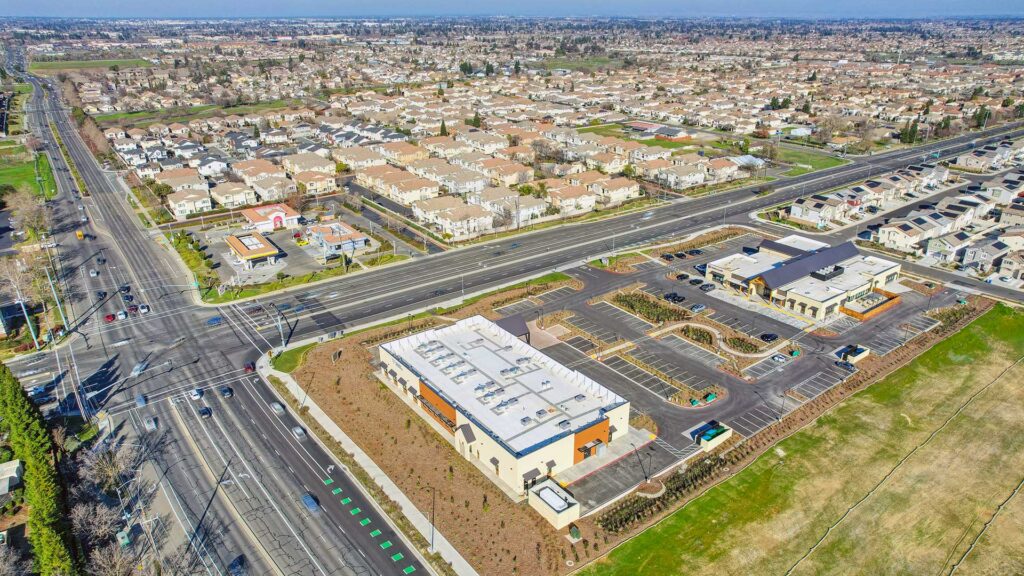
Quick-service restaurant site design is evolving quickly. The drive-thru is no longer a single lane around a standard building. It is now a coordinated system built around digital ordering, lane management, and flexible pickup. For retailers, developers, and landlords, and franchise groups, this shift is shaping how QSR real estate is planned, built, and evaluated.
The development conversation now centers on performance. Brands want higher throughput, less friction, and better land efficiency. They also need formats that support app ordering, delivery, loyalty, and repeat visits without creating traffic conflicts. As a result, QSR technology is influencing stacking depth, circulation, building placement, and pickup design from the earliest stages.
Why QSR Technology Is Changing Site Design
 QSR technology now impacts how vehicles move through a site, how orders are processed, and how peak demand is managed. It must be considered early in site planning, not added later. The goal is simple: move more orders with less congestion.
Modern layouts separate order types, reduce decision time, and create multiple pickup options. This often requires wider lanes, clearer circulation, and layouts built around digital demand. For developers, this can improve performance by supporting higher volumes on smaller footprints while increasing tenant appeal.
QSR Technology and Smarter Pickup Models
Digital-first pickup is one of the most important shifts. Many brands now direct app users into faster pickup processes, reducing dwell time and protecting throughput.
Dedicated mobile-order lanes, curbside pickup, and walk-up retrieval systems are becoming common. These formats require sites to support multiple customer paths at once. Geofencing and app-based check-in help operators time orders more accurately, but only if the physical layout allows for smooth access and exit.
Walk-up windows and pickup cubbies add another layer of flexibility. They allow operators to move mobile and delivery traffic away from the main lane, reducing congestion and improving efficiency.
Multi-Lane Drive-Thru Design Is Becoming Standard

Single-lane drive-thrus are being replaced by dual and multi-lane configurations. Some lanes handle traditional ordering, while others serve digital pickup. In other cases, multiple order points merge into one fulfillment line.
This requires more than additional stacking. It demands clear routing, strong wayfinding, and minimal conflict points. Site geometry is critical. Developers must plan for turning movements, queue storage, and safe merging patterns. Not every site can support this, which is why layout flexibility is becoming more valuable.
Vertical and Two-Story Designs Open New Possibilities
Rising land costs are pushing some brands toward vertical formats. Two-story buildings and systems like conveyor belts or lifts allow more functionality on smaller sites.
These designs help operators maintain drive-thru service in tighter locations by separating kitchen operations from pickup activity. While still selective, they highlight a broader trend toward customized site solutions instead of one-size-fits-all prototypes.
What Digital Menu Boards and AI Mean for Physical Real Estate
Outdoor digital menu boards are now central to drive-thru operations. They allow real-time updates, dynamic pricing, and better alignment with demand.
From a site perspective, placement, visibility, and infrastructure are more important than ever. These systems work best when paired with lane designs that allow drivers to move efficiently.
Voice AI and order confirmation systems add another layer. They improve accuracy and provide data on traffic flow and performance. This allows operators to evaluate sites based not just on traffic counts, but on how well they support digital throughput.
Personalization and Frictionless Payment
Loyalty integration, scan-to-pay, and vehicle recognition are reducing steps in the drive-thru process. Returning customers can move through faster, improving overall capacity without expanding the site.
These systems are not universal yet, but they point toward a more automated and personalized drive-thru experience. For real estate, that means more value placed on efficiency rather than size alone.
The Experimental Edge of QSR Development
Emerging concepts such as underground delivery systems and conveyor-based pickup aim to separate production from handoff. While not widely adopted, they highlight the industry’s focus on speed and efficiency.
Even if these formats remain limited, they influence mainstream design by encouraging better traffic separation and more flexible layouts.
How to Evaluate a QSR Site for Future Drive-Thru Innovation
How do you know if a site can support the next generation of QSR design? The answer starts with a practical review of both operations and real estate fundamentals.
- Study traffic flow before building design begins. Look at ingress, egress, stacking potential, and conflict points with adjacent uses.
- Separate customer types where possible. Digital pickup, third-party delivery, walk-up traffic, and traditional drive-thru traffic should not compete for the same space.
- Test the site against current and future prototypes. A pad that works for today’s plan may fall short if the tenant adds a second lane or dedicated pickup later.
- Plan early for power, connectivity, signage, and screen visibility. Modern drive-thru systems depend on strong infrastructure.
- Match the format to the trade area. High-volume suburban pads, freeway sites, and denser infill corridors may each require a different solution.
This step-by-step approach helps developers and tenants avoid a common mistake: treating technology as an add-on instead of a design driver. The best QSR sites now support both current operations and future adaptation.
What This Means for Drive-Thru Retailers and Retail Real Estate
For QSR operators, technology is raising the standard for site selection and store design. Efficient circulation and flexible pickup options are becoming essential.
For developers and landlords, sites that can support modern drive-thru formats are likely to see stronger demand. Properties with good access and redevelopment potential may become more valuable as operators adapt to new prototypes.
The Future of QSR Technology Is a Real Estate Story
QSR technology is reshaping site planning, development strategy, and long-term value. Mobile-order lanes, multi-lane routing, digital infrastructure, and flexible building designs are driving the next generation of QSR development.
For owners, occupiers, and developers, the best response is to think ahead. The site that works best tomorrow may not look like the standard prototype of the past. It may be more vertical, more digital, more segmented, and more operationally precise. Understanding that shift early can help create better site plans, stronger tenant alignment, and more durable real estate decisions.
Summary
Smarter pickup models, improved circulation, and digital integration are redefining how QSR sites are built and evaluated. Technology is now a primary driver of real estate performance, not a secondary feature.
If your team is evaluating QSR pads, drive-thru redevelopment opportunities, or restaurant sites that need to meet modern operating demands, Capital Rivers Commercial can help identify locations, assess development potential, and align real estate strategy with the next generation of QSR design. Explore available listings or connect with our team to discuss sites built for stronger throughput, smarter circulation, and long-term retail performance.