For older adults who need a high level of care, remaining at home can become difficult without coordinated medical and social support. The Program of All-Inclusive Care for the Elderly, better known as PACE, was created to address that challenge. PACE brings healthcare, rehabilitation, transportation, social services, and other forms of support into one coordinated program. At the center of that model is a physical PACE center designed to serve participants with a wide range of clinical and daily needs.
Understanding PACE therefore requires understanding both sides of the model. There is the care program itself, which coordinates services around each participant. Then there is the facility that makes much of that coordinated care possible. For healthcare organizations considering PACE, the connection between operations and real estate is important from the earliest stages of planning.
What Is the Program of All-Inclusive Care for the Elderly?
PACE is a federally recognized care model designed to help eligible older adults continue living in their communities rather than moving into nursing facilities. To qualify, participants generally must be at least 55 years old, live within a PACE organization’s service area, be certified by their state as needing nursing home-level care, and be able to live safely in the community with PACE support.
The model is comprehensive by design. A PACE organization coordinates the services a participant needs rather than requiring that person or their family to manage a collection of separate providers. Those services can include primary and specialty medical care, nursing, physical and occupational therapy, pharmacy services, meals, transportation, home care, and social activities.
Care is coordinated through an interdisciplinary team. Depending on a participant’s needs, that team can include primary care providers, nurses, social workers, therapists, dietitians, personal care attendants, transportation staff, and other professionals. The goal is to create and manage one coordinated plan of care for each participant.
That structure also distinguishes PACE from a traditional medical office. Care extends beyond an appointment or individual service. The program is responsible for coordinating a much broader continuum of support.
What Is a PACE Center?
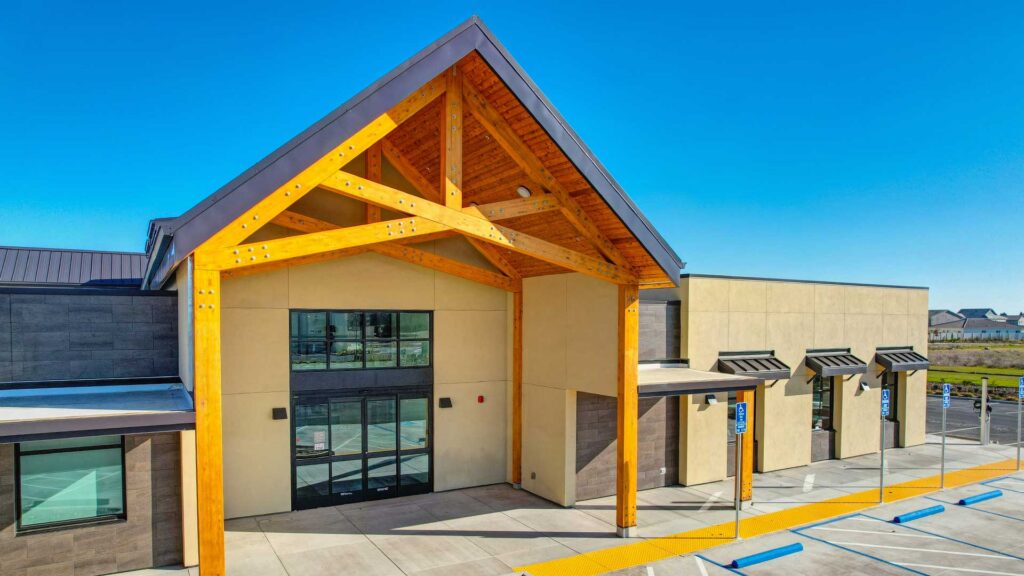
A PACE center is the physical hub where many of those services come together. Participants may spend part of their day at the facility receiving medical care, participating in therapy, eating meals, taking part in activities, or meeting with members of their care team.
Because of that range of uses, a PACE center is a specialized healthcare facility. It may need clinical areas, therapy spaces, a commercial kitchen, participant day rooms, administrative functions, and space that supports transportation operations. Participants frequently arrive and leave by program-operated vehicles, adding another important consideration to site planning and circulation.
These requirements make the building fundamentally different from a standard office or conventional outpatient clinic. Clinical care is only one part of the operation. The facility must also accommodate longer participant visits, meals, rehabilitation, social programming, staff coordination, and the movement of people with varying mobility needs.
A successful facility therefore starts with an understanding of how the PACE program will actually operate inside it. Square footage alone does not determine whether a property is suitable.
Why Location Matters for a PACE Center
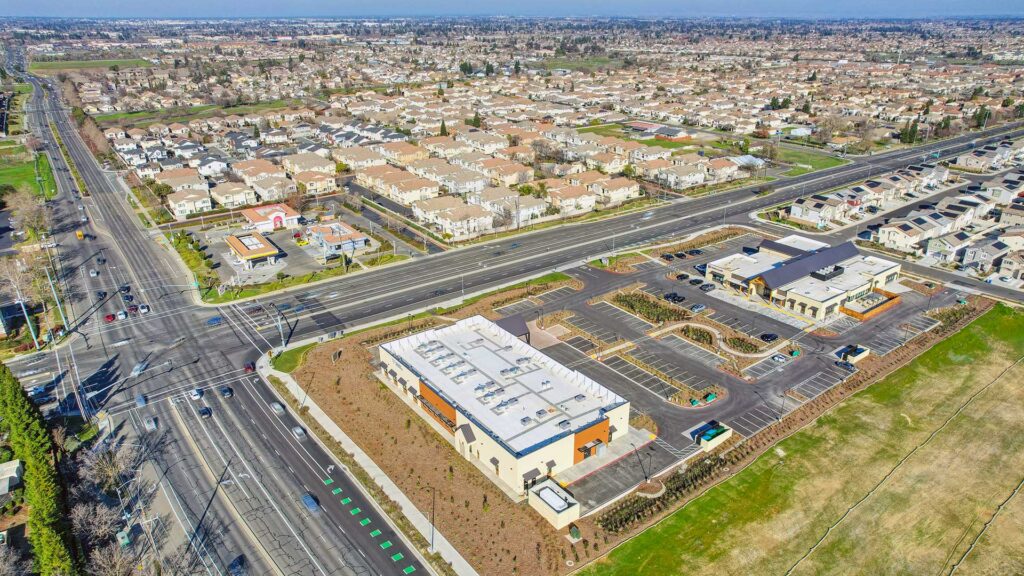
Location has an unusually important role in PACE because participants must live within the organization’s approved service area. Those service areas are defined geographically, which connects facility planning directly to the population an operator intends to serve.
A prospective site also needs to function well for daily operations. Transportation routes matter because participants may travel to and from the center regularly. Vehicle access, parking, loading and unloading areas, building configuration, accessibility, and proximity to the target participant population can all influence a site’s viability.
Real estate decisions can affect financing as well. Depending on the project, certain locations may qualify for programs such as New Markets Tax Credits or other sources of mission-oriented capital. Eligibility can vary significantly between census tracts. That makes early site screening important when an organization expects specialized capital to be part of its development strategy.
The result is a more integrated approach to site selection. Operators need to evaluate the market, service area, physical property, operational requirements, regulatory considerations, and potential capital structure together.
How Does a PACE Center Go From Concept to Facility?
 For organizations researching how to open a PACE center, the process involves much more than finding a building and renovating it. While every program and jurisdiction presents different requirements, the real estate process generally needs to address five connected questions.
- Define the program and service area. The operator first needs a clear understanding of the population it intends to serve and the operational requirements of its program.
- Identify and evaluate potential sites. Candidate properties should be evaluated for location, accessibility, transportation, physical feasibility, development requirements, and relevant financing considerations.
- Design around PACE operations. The facility plan needs to accommodate clinical care, therapy, participant activities, food service, staff functions, transportation, and other program-specific needs.
- Align approvals, financing, and development. Entitlements, healthcare requirements, project costs, financing, and the operator’s broader capital needs should be considered as parts of the same development strategy.
- Build and prepare for operations. Construction or renovation must ultimately deliver a facility that can support the operator’s care model and applicable regulatory requirements.
Why PACE Center Development Requires a Specialized Approach
PACE organizations operate under a financial model that differs from a conventional commercial tenant. Medicare and Medicaid generally provide capitated payments to the PACE organization, meaning the program receives a fixed payment per participant while assuming responsibility for covered care. Enrollment also builds over time.
Those characteristics can affect how a project is financed and structured. Traditional development assumptions may not neatly reflect an operator’s enrollment ramp, working-capital needs, or desire to preserve capital for staffing and participant care.
As a result, PACE facility development can involve several forms of capital and different ownership structures. Capital Rivers has worked with approaches that can include conventional bank financing, CDFI lending, New Markets Tax Credits, private or mission-oriented capital, and developer or operator equity. Development structures can also range from fee development to joint ventures and build-to-suit arrangements. The appropriate approach depends on the organization and project rather than a single formula.
This is one reason experienced real estate involvement can be valuable before a site has been selected. Decisions about the property, capital structure, design, and project schedule influence one another.
The Real Estate Behind Expanding PACE
 PACE operates nationally, but development requirements and approval processes can differ from state to state. Operators expanding into new markets need a real estate strategy that accounts for those differences while still supporting the core requirements of the PACE model.
Capital Rivers Commercial works with healthcare organizations on PACE facility development, including site selection, entitlements, capital coordination, and construction. The firm is also an affiliate member of the California PACE Association, or CalPACE, supporting the continued growth of PACE and the organizations working to expand access to this model of care in California.
That development perspective is ultimately about more than delivering a building. A PACE facility has to support the operator’s care model, participant population, transportation system, financial plan, and long-term growth strategy. Addressing those requirements together gives organizations a stronger foundation for moving a project forward.
Summary
A PACE center serves as a central hub for the Program of All-Inclusive Care for the Elderly, bringing medical care, therapy, meals, social activities, and other coordinated services together in a facility designed around participants’ needs. Because service areas, transportation, healthcare requirements, financing, and facility design are closely connected, developing a PACE center requires more specialized planning than a conventional commercial project. Understanding those relationships early can help PACE organizations make better decisions about where, how, and under what structure to develop their next facility.
Capital Rivers Commercial works with PACE organizations to solve the real estate and development challenges behind new facilities. From evaluating sites and development feasibility to structuring capital and managing construction, our team can help determine an approach that fits your organization and its growth plans. Learn more about Capital Rivers Commercial’s PACE development capabilities or contact our team to discuss a planned PACE center.