
In commercial real estate, it’s common to assume that placing competing retailers near each other hurts performance. However, extensive research and real-world examples show a more nuanced reality. When businesses in the same category are meaningfully differentiated, clustering can increase foot traffic, expand overall demand, and drive higher sales for all operators involved.
What is Retail Agglomeration?
Retail agglomeration refers to the clustering of similar or related businesses within a defined geographic area. While this may appear counterintuitive, decades of economic research demonstrate that these clusters often function as consumer destinations. Instead of dividing a fixed pool of customers, they expand the overall market.
The key concept is simple: when multiple options exist in one place, consumers are more likely to visit. This increases total traffic beyond what any single store could generate independently. The cluster becomes a destination, attracting a larger pool of shoppers and benefiting all tenants.
The Core Economic Framework: Market Size vs. Price Competition
 Economist Hiroo Konishi’s 2005 study outlines two competing forces that determine whether co-location is beneficial:
The Market Size Effect
A concentration of similar stores attracts more consumers, particularly those comparing options or uncertain about pricing. This expands the total addressable market.
The Price-Cutting Effect
Close proximity can increase price competition, which may compress margins when stores are nearly identical.
Konishi’s key finding is that differentiation determines the outcome. When retailers differ in price point, format, or customer segment, the market size effect outweighs price competition, resulting in higher overall revenue for both operators.
Konishi, H. (2005). Journal of Urban Economics.
Why Competitors Cluster: Hotelling’s Law
The tendency for similar businesses to locate near one another is explained by Hotelling’s Law. Introduced in 1929, this theory shows that competing firms naturally gravitate toward the same location to maximize market share.
This behavior is visible across retail categories, from fast food chains to pharmacies. The result is not inefficiency, but a strategic positioning that creates convenience and comparison opportunities for consumers.
Clusters signal to consumers that multiple options are available in one place, increasing the likelihood of a visit. Even if a shopper ultimately chooses one store, the presence of alternatives drives the initial trip.
Hotelling, H. (1929). The Economic Journal. Ridley, D.B. (2008). Duke University.
Co-opetition: Competition and Cooperation Together
Research by Teller, Alexander, and Floh (2016) provides empirical evidence that both competition and cooperation improve retail cluster performance.
Their study of 277 store managers found that:
- Competition increases overall destination appeal and foot traffic.
- Cooperation, such as shared marketing or consistent store standards, enhances cluster performance.
- The net impact on individual stores is neutral to positive when accounting for increased traffic.
This dynamic, often referred to as “co-opetition,” highlights that retailers benefit from both competing and collaborating within a shared environment.
Teller et al. (2016). Industrial Marketing Management.
Real-World Examples of Retail Agglomeration
Several clear examples demonstrate how competing retailers benefit from proximity:
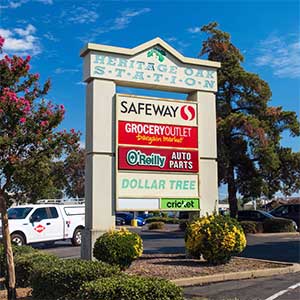
- Safeway and Grocery Outlet in adjacent centers.
- McDonald’s and Raising Cane’s on the same corner.
- Ross Dress for Less and TJ Maxx in the same power center.
- Ford and Chevy dealerships on the same boulevard.
In each case, the businesses share a category but differ in pricing, branding, or customer experience. These differences reduce direct competition while strengthening the overall destination.
Apparel and Off-Price Retail: A Strong Case Study
Apparel retail demonstrates one of the strongest agglomeration effects. Research from Targomo (2024) shows that clothing retailers benefit significantly from clustering due to comparison shopping behavior.
Consumers prefer to browse multiple stores before making a purchase. Off-price retailers such as Ross and TJ Maxx succeed together because they offer different inventory, layouts, and brand identities.
This differentiation encourages shoppers to visit both stores during a single trip, increasing total foot traffic and sales.
Targomo (2024); Seong et al. (2022).
Big-Box Retail: The Walmart and Target Dynamic
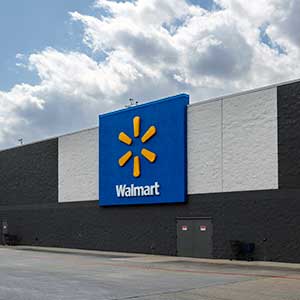 Large-format retail also reflects agglomeration benefits. Studies show that Target often benefits from proximity to Walmart by capturing spillover traffic.
Walmart acts as a dominant anchor, drawing significant consumer volume. Nearby competitors benefit from that traffic as long as they maintain differentiation in product mix or customer positioning.
This pattern reinforces the broader principle: proximity to a strong anchor can elevate surrounding retailers rather than diminish them.
Konishi, H. (2005). Journal of Urban Economics.
Restaurant Clusters and Fast Food Corridors
Restaurant rows are a visible example of agglomeration in practice. Consumers often decide on a category, such as fast food, before choosing a specific brand.
A corridor with multiple options increases convenience and encourages visits. Differentiation between concepts prevents direct price competition while supporting the destination effect.
This is why multiple quick-service restaurants frequently succeed in close proximity.
Auto Dealership Rows: High-Consideration Shopping
Auto dealerships provide one of the clearest examples of agglomeration. Research using geolocation and transaction data shows that consumers prefer visiting multiple dealerships in one trip.
Clustering reduces search costs and increases purchase likelihood. Each dealership benefits from the collective draw of the group.
Yavorsky et al. (2020); Murry & Zhou (2020).
Grocery Anchors and Spillover Effects
A study by researchers from UNC, Columbia, and Princeton examined grocery store openings and their impact on nearby businesses.
Key findings include:
- A 39% increase in foot traffic for nearby businesses.
- Strong spillover benefits for similar retail categories.
- Minimal evidence of cannibalization among grocery stores.
The research also found that higher-quality grocers generated stronger spillover effects, highlighting the importance of differentiation.
Qian, Zhang & Zhang (2023).
The Limitation: Market Saturation Threshold
Agglomeration benefits are not unlimited. Research on convenience store clustering found that excessive competition can reduce revenues once a threshold is exceeded.
When too many similar businesses operate in a small trade area, price competition intensifies and erodes profitability. This reinforces the importance of balance. Two or three differentiated competitors may strengthen a market, while too many can create diminishing returns.
Seong et al. (2022).
How to Evaluate Retail Agglomeration Opportunities
Based on the research, five key factors determine whether co-location will succeed:
- Differentiated price points attract broader customer segments.
- Unique formats or experiences reduce direct competition.
- Strong brand positioning supports coexistence.
- Comparison-shopping behavior increases cross-visitation.
- Market saturation levels remain within sustainable limits.
Key Takeaways for Commercial Real Estate
For landlords, the presence of a second retailer in the same category can strengthen a center when differentiation exists. Avoiding all competition may limit a property’s ability to become a destination.
For tenants, nearby competitors are not always a threat. In many cases, they increase traffic and improve sales performance.
For developers and municipalities, clustering complementary competitors can drive stronger economic outcomes than single-tenant strategies.
Conclusion
Retail agglomeration demonstrates that competition and proximity are not inherently negative. When businesses are sufficiently differentiated, clustering expands the market, increases foot traffic, and benefits all participants.
The research consistently supports a clear conclusion: the success of co-location depends on differentiation, not simply category overlap. Clusters create destinations, and destinations drive performance.
Capital Rivers Commercial helps clients identify locations and tenant mixes that drive stronger traffic and long-term performance. Explore available opportunities or contact our team to evaluate site selection strategies and identify locations positioned for long-term success.
Sources & References
Konishi, H. (2005). Journal of Urban Economics.
Hotelling, H. (1929). The Economic Journal.
Teller, C., Alexander, A., & Floh, A. (2016). Industrial Marketing Management.
Seong, E.Y., Lim, Y., & Choi, C.G. (2022). Environment and Planning B.
Yavorsky, D., et al. (2020). Quantitative Marketing and Economics.
Qian, Zhang & Zhang (2023). UNC / Columbia / Princeton.
Targomo (2024). Spatial Data Science report.
Ridley, D.B. (2008). Duke University.
Benjamin, J.D., Boyle, G.W., & Sirmans, C.F. (1992). AREUEA Journal.