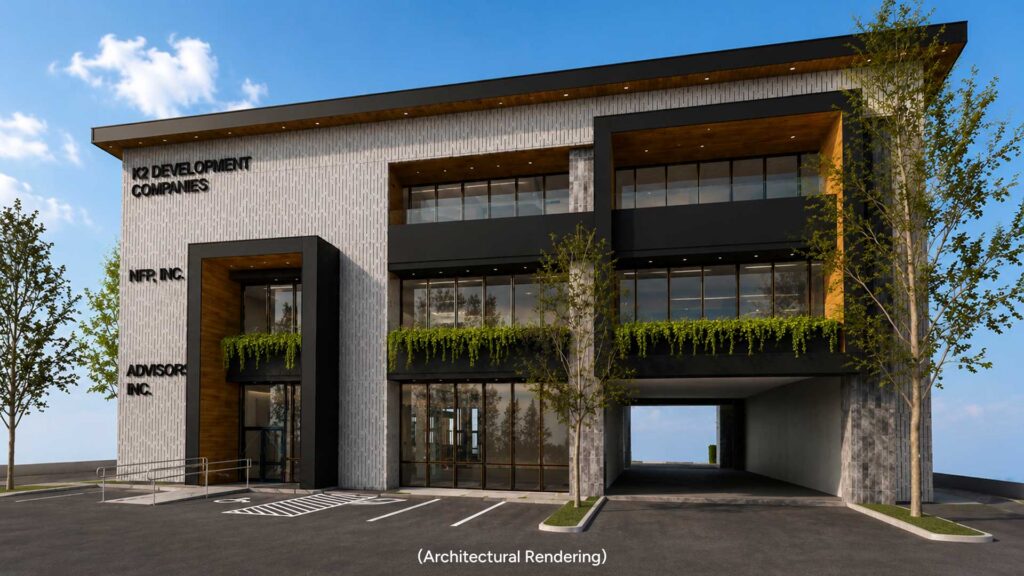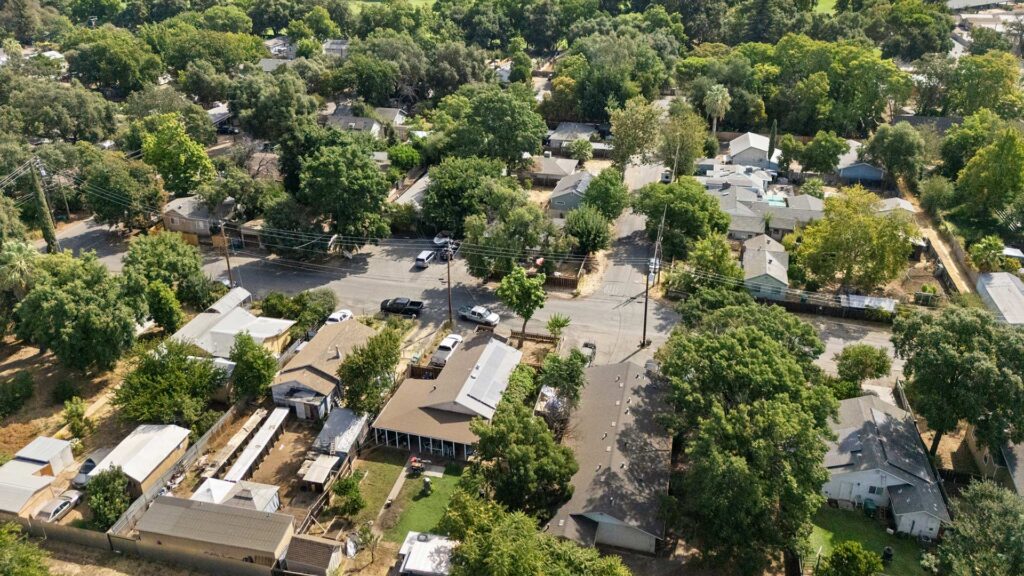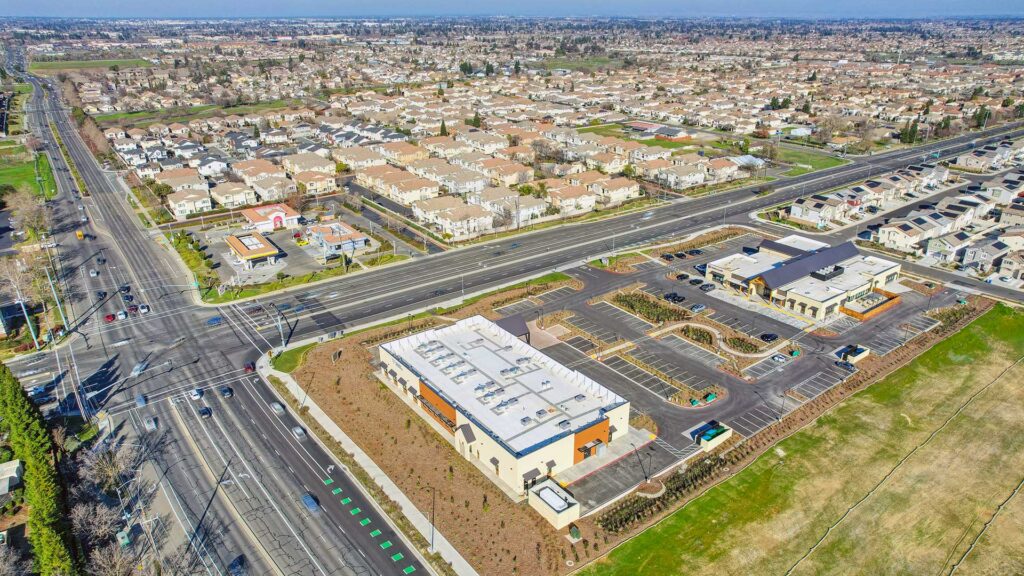
In Northern California, a fundamental shift is unfolding in commercial real estate strategy: entitled commercial land is increasingly competing head-to-head with existing buildings. Developers, investors, and occupiers alike are reassessing whether ground-up development or acquiring existing inventory presents the better path forward. Historically, the answer tilted heavily toward adaptive reuse or acquisition of stabilized assets. But today, entitlement-ready land is capturing new attention for reasons that go beyond simple cost.
Why Entitled Commercial Land Is Competing With Existing Buildings
 The cost premium for ground-up development is narrowing. In many cases, it’s even flipping. Between inflationary pressures on construction labor, rising material costs, and higher interest rates, the price of purchasing existing buildings in prime locations has remained elevated, particularly for quality Class A assets. At the same time, sellers are often hesitant to adjust pricing expectations downward, creating a misalignment in the sales market.
By contrast, investors holding entitled land, meaning shovel-ready sites with approvals in place, are positioned to offer a compelling value proposition. In Northern California, entitled sites offer speed to market without the full burden of navigating zoning and permitting processes from scratch. For occupiers with specific layout or operational needs, especially in industrial and flex uses, thoughtful site selection becomes a critical factor, and a tailored new build may now make as much or more economic sense than adapting an existing structure that wasn’t designed for current logistics or workflow standards.
Development Risk and the Appeal of Certainty
Entitled land offers a rare form of certainty in a development landscape full of delays and regulatory complexity. Securing entitlements in California can take years, especially in jurisdictions with CEQA challenges, limited staff capacity, or shifting political priorities. As a result, entitled parcels have become an increasingly scarce and valuable commodity.
From an investor standpoint, these sites reduce risk at a time when capital markets demand more clarity on timelines and returns. Institutional investors in particular are seeking to deploy capital into projects that can move fast, minimize entitlement exposure, and align with long-term demand trends such as e-commerce logistics, cold storage, or specialized R&D and life sciences.
Rising Construction Costs vs. Static Existing Inventory
 Even with elevated construction costs, the supply of functional existing buildings isn’t growing. Many legacy assets lack modern clear heights, dock configurations, or energy infrastructure. In markets like Sacramento and Redding, much of the standing inventory is decades old. While adaptive reuse remains a vital part of the market, it’s often expensive, time-consuming, and restrictive in terms of layout and efficiency.
In Chico, for example, no new industrial inventory was delivered in the past year, and vacancy is rising in older flex properties that no longer meet user expectations. Meanwhile, Sacramento saw over 1.3 million square feet of industrial space delivered, much of it speculative, but entitlement timelines mean those projects began years earlier.
The strategic value of entitled land lies in timing. Developers who already hold entitled land can enter the market as demand stabilizes or accelerates, rather than waiting years to catch the next cycle.
Financing Dynamics Are Forcing Strategic Choices
Lenders are now favoring projects with clear entitlement paths and pre-leased commitments. Construction financing has become more conservative, requiring lower leverage, stronger guarantees, and more detailed pro formas. For entitled land, this makes a difference. The project risk profile is meaningfully lower, and lenders are responding accordingly.
This has ripple effects for users, too. If a tenant is looking for 100,000+ square feet of modern industrial space in a tight submarket, they may now be more open to build-to-suit opportunities on entitled land, especially if occupancy needs align with a 12-to-18-month delivery window.
Step-by-Step: How Developers Evaluate Entitled Land vs. Existing Buildings
When deciding between buying entitled land or an existing asset, here’s the typical process developers follow:
- Site & Market Analysis: Compare location, access, labor pool, and entitlement status.
- Cost Modeling: Model total development cost vs. acquisition + retrofit cost.
- Timing Assessment: Evaluate entitlement duration (if needed) vs. time to renovate.
- Yield Forecasting: Project stabilized yield and potential exit cap rate for both options.
- Capital Stack Planning: Align financing sources with risk profile and timeline.
Entitled land wins when the ability to build exactly what’s needed, on a predictable schedule, outweighs the benefit of quick occupancy from an existing structure.
Strategic Shifts Are Accelerating
 In Northern California, developers with land holdings are activating long-stalled parcels as fundamentals begin to stabilize. Big-box industrial users are once again signing large leases in Metro Air Park and West Sacramento, with many new builds delivered in recent years still leasing up.
At the same time, the pool of desirable existing buildings is shrinking. Product built in the 1980s or earlier often needs seismic upgrades, utility overhauls, or interior reconfiguration. For users with high-tech or logistics needs, those challenges make ground-up development, if entitled, more attractive, even with the higher initial capex.
Conclusion: Entitled Land Is Now a Direct Competitor to Existing Assets
Entitled commercial land is shaping active strategies, attracting capital, and meeting user needs that existing buildings sometimes can’t. As the development cycle recalibrates, the role of these shovel-ready sites will only grow more central.
Summary
Entitled commercial land has moved from “land banking” territory into active strategic competition with existing buildings. For developers, investors, and tenants in Northern California, the equation has shifted. Speed, customization, and entitlement certainty are now as valuable as vintage, location, and cash flow.
With in-house development and brokerage capabilities, Capital Rivers Commercial advises clients on when entitled land strategies make sense and where existing buildings offer advantages. Understanding both sides of the equation is critical for making forward-looking, site-specific decisions in today’s evolving CRE landscape. Contact our team to assess your site strategy in today’s shifting market.