The Northern California commercial real estate market continues to show distinct trends across Sacramento, Chico, and Redding. Retail leasing remains active, office performance varies significantly by region, and industrial demand is adjusting to changing inventory levels. Meanwhile, multifamily markets are stabilizing as new construction slows. Recent market data reveals how vacancy, absorption, rental rates, and development activity are influencing each property type, offering valuable insight for property owners, investors, and businesses.
Northern California Commercial Real Estate Market: Retail Trends
 Retail markets across Sacramento, Chico, and Redding recorded positive net absorption over the past 12 months, indicating that tenant move-ins exceeded move-outs. However, rent growth remains modest across all three regions.
Sacramento recorded approximately 551,000 square feet of net absorption, with vacancy at 6.0%. Despite positive leasing activity, annual rent growth was just 0.2%. The market continues to face challenges with older retail inventory. Over half of Sacramento’s 7.6 million square feet of available space has been marketed for longer than a year. Retailers increasingly favor newer, well-located properties, leaving some aging shopping centers facing prolonged vacancies.
Chico maintains a lower retail vacancy rate of 4.7%, with approximately 14,000 square feet of annual net absorption. Asking rents average $18.60 per square foot annually, reflecting 0.8% growth. Performance varies by retail format, with general retail vacancy at just 3.0% compared to 8.2% for neighborhood shopping centers. Limited construction activity suggests that existing properties will remain the primary source of leasing opportunities.
Redding recorded approximately 89,000 square feet of positive absorption, helping reduce vacancy to 4.9%. Asking rents average $21.00 per square foot annually, with 0.8% growth. The market also has approximately 42,000 square feet under construction, reflecting continued investment in retail development.
Across the region, positive absorption signals ongoing retail demand. However, modest rent growth and differences between property formats emphasize the importance of location, building condition, and tenant suitability.
Office Market: Sacramento Faces Greater Leasing Challenges
Office market conditions differ considerably across Northern California. Sacramento continues to experience elevated vacancy, while Chico and Redding maintain relatively tight inventories supported by limited development.
Sacramento’s office vacancy rate stands at 10.8%, with approximately 175,000 square feet of negative annual net absorption. New leasing volume remains over 25% below its pre-pandemic average, and average transaction sizes have declined. Changes in government office occupancy have also affected demand as California transitions some agencies into state-owned buildings. Although annual asking rents increased 1.3%, concessions remain common as landlords compete for tenants.
Chico reports a substantially lower office vacancy rate of 3.2%, supported by approximately 10,100 square feet of positive annual absorption. Asking rents average $18.60 per square foot annually, with 2.0% growth. With only 11,000 square feet under construction, limited new supply continues to support occupancy across the market.
Redding maintains a similarly low vacancy rate of 3.4%, with approximately 11,400 square feet of positive absorption. Annual rent growth reached 2.3%, the strongest among the three office markets. Despite a decline in office-using employment over the past five years, limited inventory growth has helped maintain stable occupancy.
These differences demonstrate how local supply conditions influence office performance. Sacramento’s larger inventory and changing tenant requirements create a more competitive environment, while Chico and Redding benefit from relatively limited available space.
Industrial Market: Absorption and Vacancy Tell Different Stories
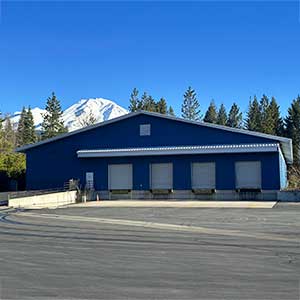 Industrial market performance remains uneven across the region. Although rent growth has slowed in all three markets, vacancy and absorption trends reveal different levels of tenant demand.
Sacramento’s industrial vacancy rate stands at 7.0%, following approximately 291,000 square feet of negative annual absorption. Nearly 889,000 square feet of new space was delivered over the same period, contributing to increased competition. However, recent quarterly activity has improved, with positive absorption for three consecutive quarters. Approximately 1.8 million square feet remains under construction, including major distribution projects at Metro Air Park. Annual rent growth has slowed to 0.4%, reflecting elevated availability and competition from sublease space.
Chico reports the highest industrial vacancy rate at 9.0%, but its occupancy trends are improving. Approximately 127,000 square feet of positive annual absorption helped reduce vacancy by 1.1 percentage points. The market has roughly 1.1 million square feet available and no industrial construction underway. Asking rents average $9.90 per square foot annually, with minimal growth.
Redding has the lowest industrial vacancy rate at 4.3%, although approximately 50,200 square feet of negative absorption contributed to rising vacancy. Asking rents average $9.60 per square foot annually, reflecting a slight decline of 0.2%. With no new industrial construction underway, existing inventory remains the primary source of available space.
Industrial conditions illustrate why vacancy rates must be considered alongside absorption. Chico’s higher vacancy is accompanied by improving demand, while Redding’s tighter market has experienced declining occupancy. Sacramento is showing renewed leasing momentum but continues to absorb recent development.
Multifamily Market: Slower Construction Supports Stabilization
Multifamily markets across Northern California are experiencing relatively stable occupancy, although differences in recent development activity continue to influence vacancy and rent growth.
Sacramento’s multifamily vacancy rate stands at 6.2%, down 0.7 percentage points over the past year. Approximately 2,346 units were absorbed, exceeding the 1,399 units delivered during that period. This marks an improvement following several years of substantial apartment construction. Roughly 11,000 market-rate units opened between 2022 and 2025, creating increased competition among property owners. Annual rent growth remains limited at 0.3%, and leasing concessions continue to influence effective rental income.
Chico maintains a multifamily vacancy rate of 3.9%, with average asking rents near $1,430 per month. Annual rent growth reached 1.5%, supported by minimal inventory expansion. No new units were delivered over the past year, and only six market-rate units are under construction. Limited development has helped stabilize occupancy, although modest absorption indicates relatively slow demand growth.
Redding reports the lowest multifamily vacancy rate at 3.6%, following 40 units of positive annual absorption. Average asking rents stand near $1,300 per month, with 2.5% annual growth. No new units were delivered, and none are currently under construction. Limited supply has supported occupancy and stronger rent growth relative to Sacramento and Chico.
Across the region, the relationship between construction and demand remains central to multifamily performance. Sacramento is gradually absorbing its recent apartment deliveries, while Chico and Redding continue to benefit from limited new development.
Summary: Northern California Commercial Real Estate Outlook
Northern California’s commercial real estate markets reflect varying levels of supply, demand, and development activity. Retail absorption remains positive across all three regions, although rent growth is modest. Sacramento’s office market faces greater leasing challenges than Chico and Redding, where limited inventory supports lower vacancy. Industrial conditions remain mixed, with improving demand in Chico, renewed leasing momentum in Sacramento, and softer absorption in Redding. Multifamily occupancy is stabilizing as Sacramento absorbs recent construction, while limited development supports tighter conditions in Chico and Redding. These trends reinforce the importance of evaluating each market and property type individually when making commercial real estate decisions.
Capital Rivers Commercial publishes quarterly market reports covering retail, office, industrial, and multifamily properties throughout Sacramento, Chico, and Redding. Explore our latest market reports for additional data and regional insights, or contact our team to discuss commercial leasing, investment, and development opportunities.