Understanding the operations, economics, and real estate strategies that can help expand PACE across the country.
By Greg Aguirre | CEO, Capital Rivers Commercial
I’ve attended plenty of real estate, retail, and other industry conferences over the years, but my first National PACE Association (NPA) conference in Denver was a different experience.
I’ve attended plenty of real estate, retail, and other industry conferences over the years, but my first National PACE Association (NPA) conference in Denver was a different experience.
As a newer affiliate member of CalPACE, I wasn’t entirely sure what to expect. From the first reception, I was welcomed with open arms. I began recognizing familiar faces, from contractors and consultants to others involved in supporting PACE organizations.
What struck me most was the genuine willingness of people to share their experiences, exchange ideas, and help one another succeed. Despite the different organizations, backgrounds, and business models represented, there was a common purpose: expanding access to quality care that allows older adults to remain in their homes and communities.
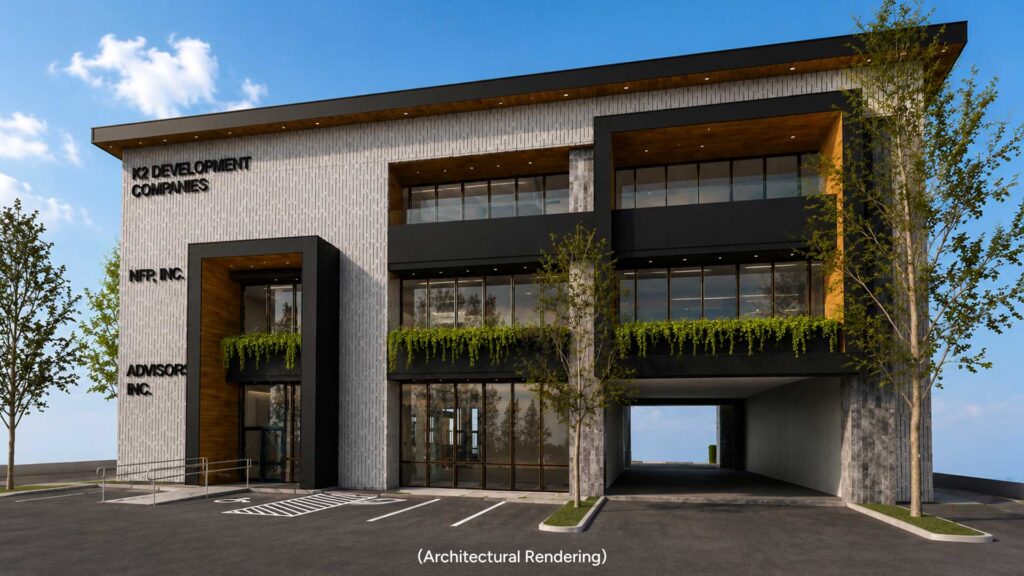
At Capital Rivers Commercial, we’ve developed and continue to own the real estate for an operating PACE center, with approximately $70 million in three additional adaptive-reuse PACE facilities under construction. We’ve become passionate about helping organizations overcome the real estate and capital challenges that can stand in the way of expansion.
Our experience spans retail development, specialized healthcare facilities, and other complex commercial real estate projects, including several air medical transport facilities that we continue to own. Throughout my career, I’ve believed that successful real estate development requires more than expertise in buildings and construction. It requires a deep understanding of the operations, economics, and long-term objectives of the organizations we serve.
I came to Denver hoping to make new connections and deepen my understanding of PACE. I left with an even greater appreciation for the complexities of operating these programs and several observations about the opportunities ahead.
Understanding the Operation Is Just as Important as Understanding the Real Estate
Most of the sessions I attended had very little to do with real estate. They focused on clinical operations, participant safety, staffing, technology, regulatory requirements, and the challenges of delivering care.
And that’s exactly why I found them valuable.
Whether we’re developing a retail center or a healthcare facility, I’ve always believed that understanding what makes the underlying operation successful is critical to developing successful real estate.
It’s not enough to understand construction costs, lease rates, or building requirements. Understanding the financial metrics, staffing needs, operational workflows, and challenges facing an organization allows us to make better decisions about everything from site selection and facility design to financing and long-term ownership.
That understanding is equally valuable when working with lenders, investors, and other capital providers who may be unfamiliar with the PACE model. The ability to explain how a PACE organization operates, where its revenue comes from, what drives its expenses, and how it manages risk can make a meaningful difference in obtaining financing and structuring a successful project.
Ultimately, real estate decisions have lasting implications for an operator’s financial performance, including occupancy costs, property taxes, and the capital available to support its mission.
PACE Is a Proven Model, but Financial Sustainability Requires Planning
On Lok pioneered the model that would become PACE in San Francisco more than 50 years ago. Today, the Program of All-Inclusive Care for the Elderly has a long history of providing comprehensive, coordinated care to older adults.
We don’t need to keep proving the fundamental concept. We need to focus on how to expand it responsibly and create financially sustainable programs that can succeed in different communities and regulatory environments.
One conversation at the conference particularly stood out. I heard about a hospital system considering a three-year PACE pilot with enrollment capped at just 28 participants.
From a financial feasibility perspective, that raises serious concerns.
Opening a PACE center requires far more than funding the building, purchasing equipment, and hiring staff. Organizations must also secure sufficient working capital to support operations during the enrollment ramp-up, which can take years before a program reaches financial sustainability.
Those economics vary significantly depending on reimbursement rates, state regulations, participant acuity, enrollment growth, and operating costs. In some markets, margins can be particularly challenging.
A program with a limited operating window and an enrollment cap that may be insufficient to support its fixed costs can be set up for failure before it opens its doors, regardless of how effective the underlying care model may be.
I also sensed that some organizations, particularly those newer to PACE, may underestimate these upfront capital requirements.
For me, this reinforces why development costs, operating projections, capital availability, and long-term occupancy expenses need to be evaluated together from the beginning.
There Is No One-Size-Fits-All Real Estate Strategy
Every PACE organization is different. Its capital position, service area, growth strategy, organizational structure, and long-term objectives all influence the best approach to real estate.
For some, a turnkey development with a long-term lease may provide the certainty and financial flexibility needed to focus capital on operations. Others may benefit from fee-based development or construction management services while retaining ownership.
Creative joint ventures, New Markets Tax Credits, community development financing, and other capital strategies may create opportunities that aren’t immediately apparent through conventional real estate financing.
In some cases, the right strategy may involve securing long-term site control today while creating a pathway to ownership in the future.
I believe the goal should always be to explore the available options and structure a solution around the organization’s objectives, rather than trying to fit every project into the same development or ownership model.
The real estate strategy should support the organization’s mission and financial sustainability, not dictate them.
Facility design is another critical part of that equation.
One conference session reinforced the importance of involving the people who will actually operate and work within a PACE center early in the design process.
Everything from participant circulation and transportation access to clinical space, administrative offices, staffing requirements, and future expansion can affect operating efficiency for years to come.
Right-sizing a facility is particularly important. Building too much space can unnecessarily increase construction and occupancy costs, while building too little can constrain enrollment, create operational inefficiencies, and limit future growth.
Some of the most valuable development decisions are made long before construction begins.
Thinking Beyond the Traditional PACE Center
Another encouraging takeaway was seeing how organizations are exploring opportunities to expand access to care through creative partnerships and alternative service models.
Rural communities present tremendous opportunities, but also unique challenges related to transportation, population density, staffing, and financial sustainability.
Partnerships with federally qualified health centers (FQHCs), affordable housing developers, municipalities, and other community-based organizations may help address some of those barriers.
I was particularly interested in examples of PACE organizations partnering with affordable senior housing developments and other healthcare providers to create more integrated environments for delivering services.
These partnerships can provide opportunities to share resources, leverage different sources of capital, reduce transportation barriers, and potentially serve populations that might otherwise be difficult to reach.
They also highlight why developers and operators should think beyond an individual building and consider how real estate can support a broader network of community services.
There is also value in recognizing the different contributions nonprofit and for-profit PACE organizations can make to the industry’s growth. Their financing structures and approaches may differ, but both operate within the PACE regulatory framework and share a responsibility to deliver high-quality participant care.
I believe there is tremendous opportunity for these organizations to learn from one another.
Education and Advocacy May Be Our Greatest Opportunities
One theme I heard repeatedly throughout the conference was the need for greater education about PACE.
That includes prospective participants and their families, but also state agencies, policymakers, healthcare organizations, lenders, investors, and capital providers.
PACE is sometimes misunderstood or grouped together with other Medicare and Medicaid programs without recognizing the differences in its care model, regulatory framework, and financial structure.
Misunderstanding can create unnecessary obstacles to expansion, particularly when organizations are seeking approvals, identifying capital partners, or introducing PACE to new markets.
I’ve seen firsthand how important it is to educate lenders about PACE, particularly when they’re evaluating the financial strength of an operator, the sustainability of its reimbursement model, and the long-term viability of the real estate.
Traditional real estate underwriting doesn’t always capture the full picture of a PACE organization. Lenders and investors need to understand the regulatory framework, enrollment dynamics, operating performance, and the stability of the underlying business.
The better we can communicate those factors, the greater the opportunity to attract lenders and investors who may otherwise overlook PACE as an investment opportunity.
And that education needs to extend beyond the financial community.
The more policymakers, healthcare systems, and community leaders understand how PACE works and the benefits it can provide, the better positioned we are to expand access to this model of care.
Leaving Denver With an Even Greater Commitment to PACE
What made this conference so refreshing wasn’t simply the information presented or the connections made.
It was the people.
I’ve spent much of my career around real estate developers, investors, brokers, and business leaders. It was inspiring to spend time with so many individuals who are genuinely committed to making a difference in people’s lives.
There was an openness to sharing experiences, discussing challenges, and helping others succeed that I found particularly encouraging.
I also came away recognizing how much opportunity remains to bring together the healthcare, real estate, development, and financial communities to support the growth of PACE.
I’m leaving Denver even more motivated to help educate lenders and capital providers, explore creative development and financing structures, and work alongside organizations committed to bringing PACE to more communities.
I’m especially looking forward to our upcoming webinar with CalPACE, where we’ll have an opportunity to share some of the real estate and capital strategies we’ve used, learn from others who have approached similar challenges differently, and continue advocating for greater understanding of PACE within the financial community.
As developers, we have an opportunity to contribute more than buildings. We can bring relationships, financial expertise, creative thinking, and development experience to help organizations overcome obstacles and achieve their long-term objectives.
And perhaps that’s my biggest takeaway from Denver.
PACE doesn’t need to be reinvented. We need to keep finding better ways to fund it, develop it, and make it accessible to more seniors across the country.
I’m grateful to the National PACE Association, CalPACE, the presenters, and everyone who took the time to share their experiences and perspectives. I’m looking forward to continuing those conversations and doing our part to help PACE grow.
Capital Rivers Commercial works with PACE organizations to develop real estate and financing strategies that support sustainable growth. Connect with our team to discuss your organization’s development needs.